You’ve picked your herbs. You’ve finalized your formula. Your packaging looks great. You’re ready to launch.
When you start a brand there is one thing that can make or break it in the year.
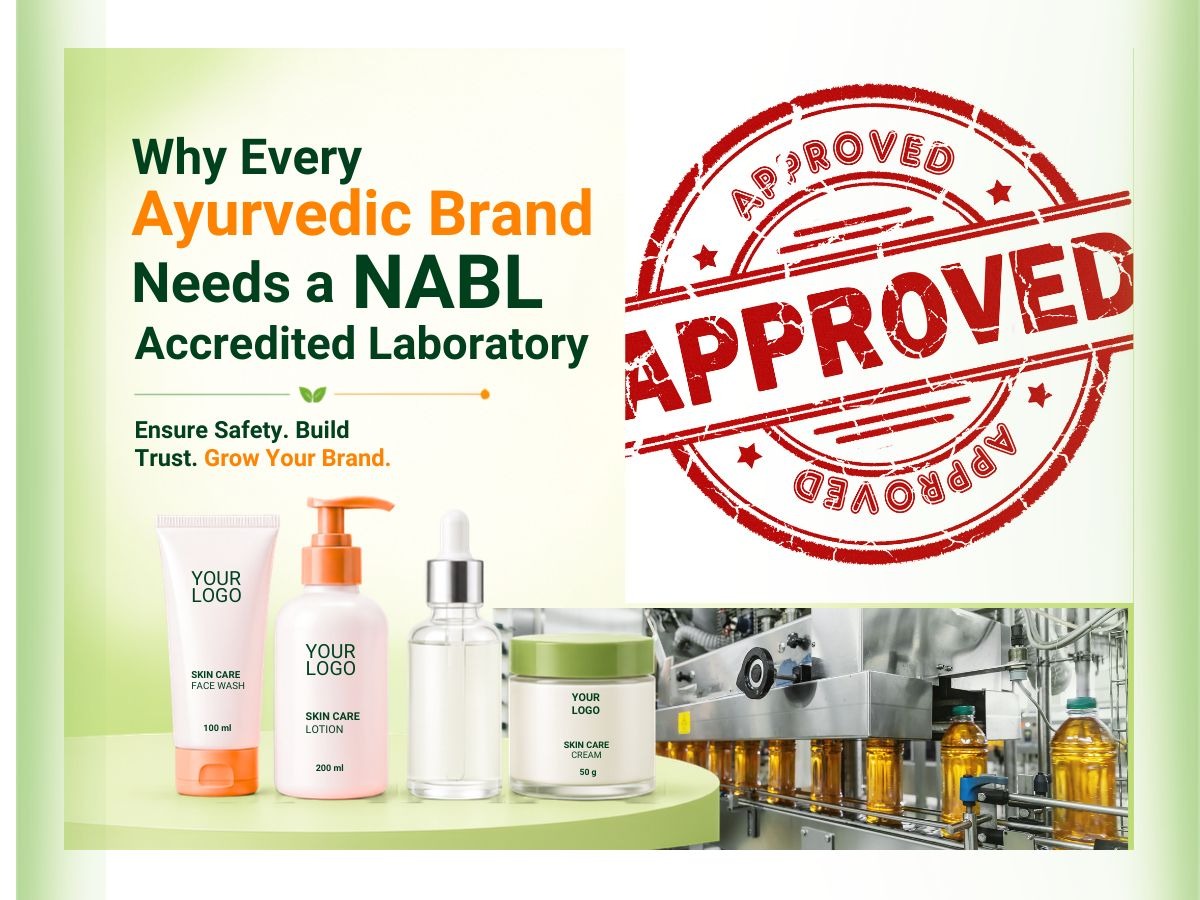
This is lab testing in a NABL accredited laboratory. If you do not do this your brand might get a lot of reviews or people might return the products. You might even get a legal notice.
Many new Ayurvedic brands make a mistake when they skip this step. It is a common mistake but it can cost them a lot. Lab testing in a NABL accredited laboratory matters, for brands. If Ayurvedic brands skip this step a lot of things can go wrong.
What Is a NABL Accredited Laboratory?
NABL stands for the National Accreditation Board for Testing and Calibration Laboratories. This is the Indian body that checks if a lab is good enough to test products correctly.
NABL is very important because it makes sure that labs do their job properly.A NABL accredited lab is certified under ISO/IEC 17025:2017 which’s a big deal. This is a standard for testing and calibration.In other words NABL accredited lab means that the lab has the right equipment, the right methods and the right people to give you results that you can really trust.
Not every lab that tests products is a NABL accredited lab.Some labs do not have NABL accreditation at all.This means that the results from these labs may not be good enough if someone like a regulator or a retailer or a customer asks questions about the results from these labs.
NABL accreditation is what makes a lab trustworthy. That is why NABL accredited labs are important.
Why This Matters So Much for Ayurvedic Products Specifically
Ayurvedic products are made from herbs.. Just because something is natural does not mean it is safe. These herbs take in everything that’s in the soil and water and air around them. This includes things like lead and mercury and arsenic. Some Ayurvedic products also have minerals in them on purpose.. These minerals have to be cleaned up right or they are not safe to use.
This is a concern. It is not something that ever happens. Many studies have found that a lot of products have heavy metals in them. Some of these products have many of these bad things that they are not safe to use. For example in December 2025 a product that was supposed to help with pain was taken off the market in the US. This happened because it had a lot of lead in it. This shows what can happen if a product is not tested properly before it is sold.
This is the kind of problem that testing in a lab is supposed to find before a product is ever sold to a customer. Ayurvedic products need to be tested so that people can be sure they are safe to use. Proper testing can help find the things like lead and mercury in Ayurvedic products before they hurt someone.
What Happens If You Skip Lab Testing
If You Skip Testing |
You don’t know if your product has unsafe heavy metal levels |
Microbial contamination could go unnoticed |
You can’t prove your product’s shelf life |
Retailers and marketplaces may reject your product |
One bad batch can damage your brand permanently |
You have no real proof if a customer complains or a regulator asks |
If You Test in a NABL Lab |
Every batch is checked for heavy metals before it’s sold |
Microbial safety is confirmed before launch |
Stability testing tells you exactly how long it stays safe and effective |
A NABL test report builds instant credibility |
Consistent, documented quality protects your reputation |
You have a valid, recognized report to show |
What Gets Tested in a NABL Accredited Laboratory
A proper NABL lab doesn’t just check one or two things. It looks at your product from multiple angles:
Chemical and phytochemical testing — checks active ingredient levels, screens for the right phytochemicals, and tests for heavy metals like lead, mercury, and arsenic.
Microbiological testing — checks for harmful bacteria, fungi, and overall microbial load, to confirm the product is safe to consume or apply.
Stability and shelf-life testing — checks how your product holds up over time, including how well it performs in its actual packaging.
Finished product testing — confirms the herbs used are authentic (not substituted with something cheaper) and checks purity for oils, powders, extracts, and blends.
How NABL Testing Helps Your Brand, Not Just Your Compliance
It’s easy to think of lab testing as just a legal checkbox. It’s actually much more than that.
- It protects your customers. This is the most important reason. A tested product is a safer product.
- It protects your brand’s reputation. One contaminated batch, even by accident, can end a brand’s reputation overnight — especially in the age of social media reviews.
- It satisfies multiple regulators at once. A NABL accredited report is recognized in line with AYUSH, FSSAI, and WHO-GMP expectations, so you’re not running separate tests for separate authorities.
- It opens doors. Many large retailers, marketplaces, and export markets simply won’t list a product without a valid, accredited test report.
- It gives you real proof. If a customer ever questions your product, or a regulator asks for documentation, you have a recognized report ready — not just a verbal assurance.
How This Works at Sanskar Ayush
At Sanskar Ayush, testing isn’t an outside step you have to arrange separately — it’s built into how we manufacture.
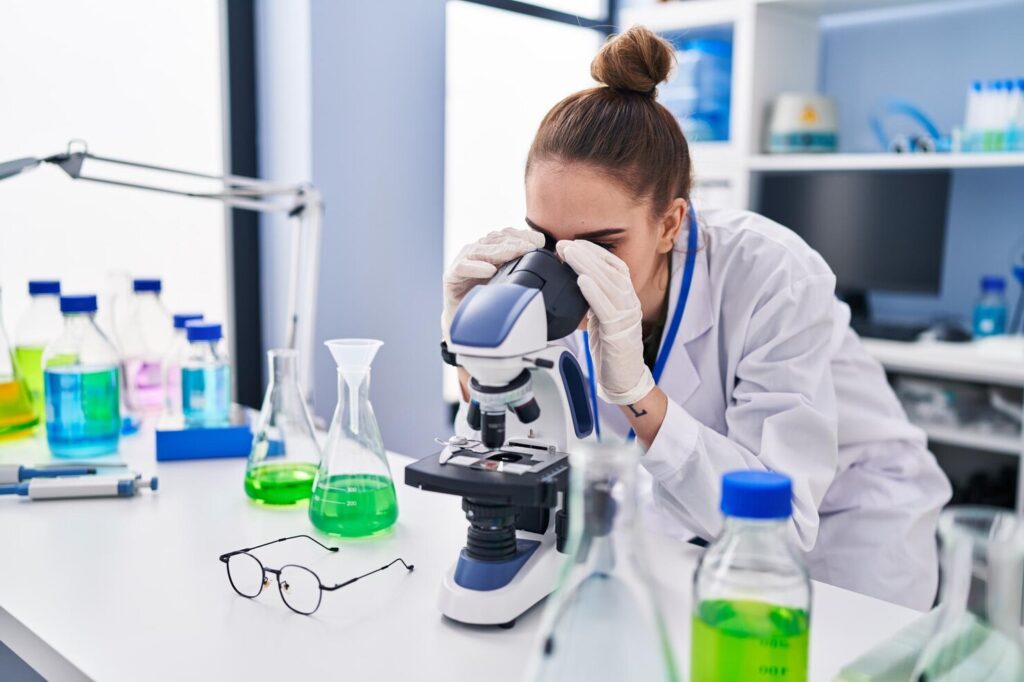
Our laboratory is a place where we do tests on the things we make. It is a laboratory because it has a special certificate (ISO/IEC 17025:2017) that says it does good work. We test lots of things like products, herbs, special foods that are good for you, beauty products and food.
Because our laboratory is here with us you get two good things that other companies do not have. First we can do things faster because we do not have to wait for someone to do the tests for us. Second, we can make sure that the things we make are of quality because the same people who make the things also test them.
We test every batch of the things we make like tablets, capsules, syrups and Chyawanprash. This means that our Ayurvedic tablets are checked times to make sure they are good. We check things like how hard they are, if they break easily, if they dissolve properly, if they are safe from bad germs and if they have any bad metals in them. We do all these checks on every batch of tablets, not just on a few of them.
Don't Launch Without This Step
A great formula deserves a tested, proven product behind it. Before you launch your Ayurvedic brand, make sure your manufacturing partner has real, in-house NABL accredited testing — not just a promise of “quality checked.”
Get a free consultation today and let’s talk about how we test and manufacture your product, right from day one.
You can also learn more about our NABL-certified product testing services, or explore our Ayurvedic tablets range.
Sanskar Ayush Medicare Pvt. Ltd. — Haridwar, Uttarakhand | +91-9193078685 | bd@sanskarayush.in
How do we help?
We have a Professional and Experienced Team who always bring Innovative Ideas.
What does "NABL accredited" actually mean?
It means the laboratory has been certified by India’s National Accreditation Board for Testing and Calibration Laboratories, confirming it meets the ISO/IEC 17025:2017 standard for accurate, reliable testing.
Is NABL testing legally required for Ayurvedic products?
Testing requirements vary depending on your product category and license type, but a NABL accredited report is widely recognized and helps you meet AYUSH, FSSAI, and WHO-GMP expectations smoothly, rather than scrambling to prove compliance later.
Can't I just trust my raw material supplier's quality claims?
No. Raw material quality can vary by batch, and contamination can also happen during processing. Testing your actual finished product is the only way to know what’s really in it.
Does lab testing slow down my product launch?
Working with a manufacturer who has an in-house NABL lab, like Sanskar Ayush, actually speeds things up — you’re not waiting on a separate, external lab’s turnaround time.
What's the difference between a NABL accredited lab and a regular testing lab?
A regular lab may run similar-sounding tests, but without NABL accreditation, there’s no independent confirmation that its equipment, methods, and results meet a recognized standard. This matters if your test report is ever questioned.