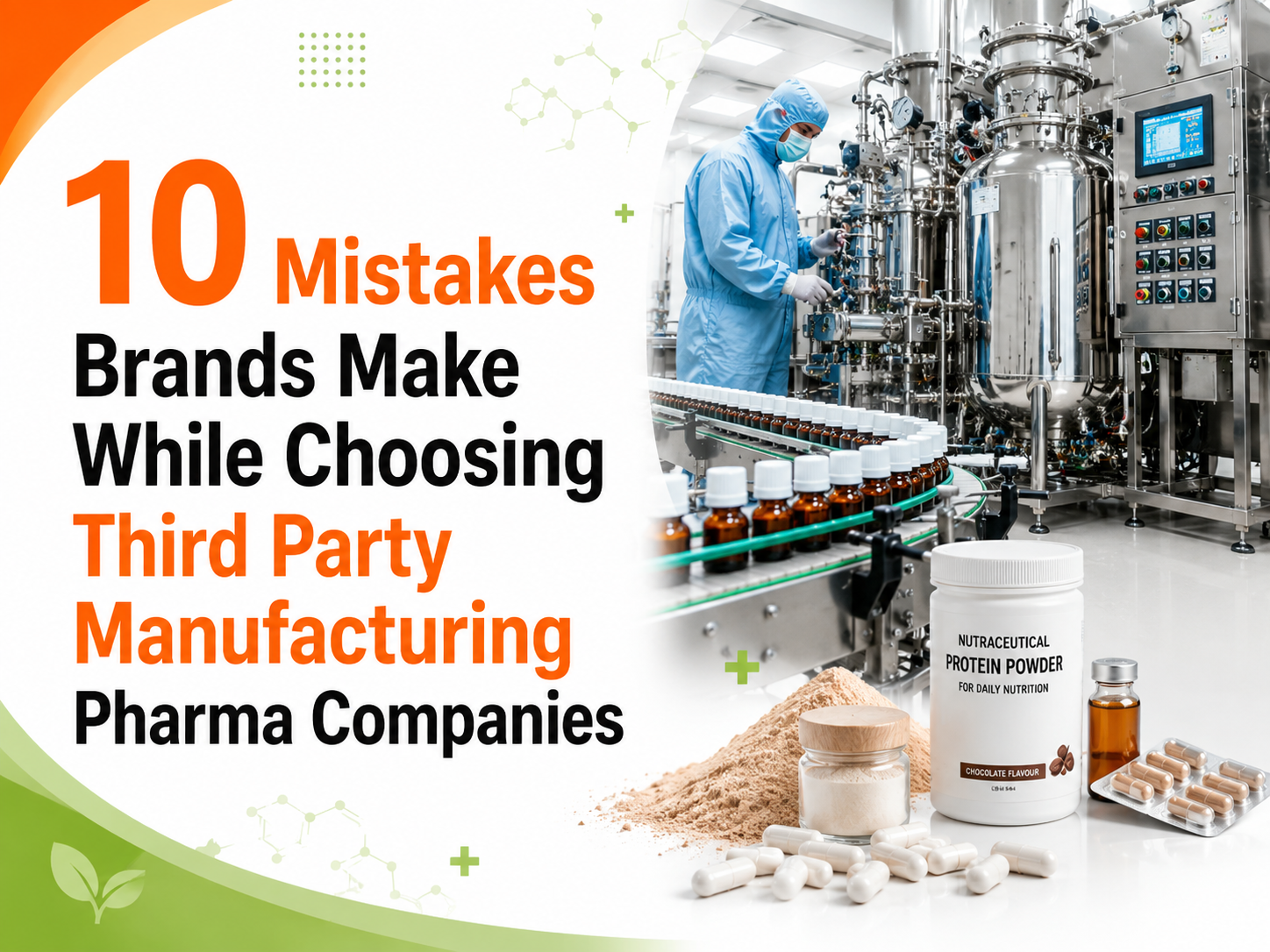
The pharmaceutical companies, healthcare brands, startups, and distributors prefer third-party manufacturing pharma services to start products in the absence of manufacturing infrastructure. But choosing the wrong manufacturing partner can cause a product of poor quality, compliance issues, delayed deliveries, and a large financial loss. When an entrepreneur starts to look into the many things he or she can lose in each other, the simple knowledge they gain helps them to avoid the following mistakes and to get to a reliable manufacturing partner which leads them to a successful pharmaceutical business.
The Importance of selecting the appropriate Partner for the Third-Party Manufacturers
Pharmaceuticals have a lot of regulations to follow, product quality plays a key role in patient safety, which ultimately impacts your brand image, as well. A third party manufacturer is more than just a supplier; it is an extension of your business.
It was the case in the industry: from prior experience, numerous companies think about price, without paying attention to certifications, quality control system, R&D capacity or regulatory compliance. These flaws also result in challenges that can be expensive to resolve later.
For the assurance, a solid third-party pharma manufacturing partner helps for:
- Consistent product quality
- Regulatory compliance
- Timely product delivery
- Scalable production
- Long-term business growth
1. Selecting a Manufacturer According only to Price
One of the biggest blunders that companies make is to choose the manufacturer only because it offers the cheapest quote.
Lower prices may indicate:
- Inferior raw materials
- Poor quality control
- Limited testing procedures
- Outdated manufacturing equipment
Rather than looking at just the expense, consider the full spectrum of quality the manufacturer offers.
2. Ignoring GMP/Other Regulatory Certifications
The certification is one of the most powerful determinants of the quality of a product.
Check out the following before setting a manufacturing partner:
- GMP Certification
- WHO-GMP Compliance
- ISO Certifications
- FSSAI compliance (for nutraceuticals)
- Product Manufacturing Licenses
Manufacturers that use certified systems adhere to stringent production and quality protocols.
3. Failing Review of Manufacturing Infrastructure
Many companies don’t examine manufacturing facilities before signing deals.
An advanced pharmaceutical manufacturing plant should encompass:
- Advanced production equipment
- Cleanroom environments
- Automated packaging systems
- Quality control laboratories
- Proper storage facilities
Infrastructure impacts the consistency and operation efficiency of products directly.
4. Failing to Conduct Product Quality Testing
The quality should never be treated as an optional check.
A dependable 3rd party pharma services must offer:
- Raw material testing
- In-process quality checks
- Microbial testing
- Stability testing
- Finished product testing
Quality assurance safeguards patients as well as brand reputation.
5 . Failing to Manage Research & Development Potential
Brands need strong R&D support to remain competitive.
An organisation with dedicated R&D staff will help with:
- Product innovation
- Custom formulations
- Ingredient optimization
- Product improvements
- Market trend adaptation
That’s especially important for nutraceutical, herbal and specialty pharmaceutical products.
Comparison Table: Choosing Right Third Party Manufacturing Partner
Evaluation Factor | Poor Manufacturing Partner | Reliable Manufacturing Partner |
Certifications | Limited or unavailable | GMP, WHO-GMP, ISO certified |
Quality Testing | Basic testing only | Multi-stage quality testing |
R&D Support | No formulation support | Dedicated R&D team |
Documentation | Incomplete records | Complete regulatory documentation |
Production Capacity | Limited scalability | Flexible production capacity |
Communication | Slow responses | Transparent communication |
Delivery Timelines | Frequent delays | Consistent delivery schedules |
Compliance Support | Minimal assistance | Full regulatory support |
This comparison is an important example of why assessing manufacturer’s performance over price matters for long term business success.
6. Not Checking Production Capacity
Most brands select a manufacturer that can meet their current needs and cannot meet potential growth.
Important questions to ask:
- What is the monthly production capacity?
- Can production ramp up during peak demand?
- What are average lead times?
- How do you keep track of urgent orders?
As your business scales, it is easier to avoid supply interruptions through a scalable manufacturing partner.
7. Failure to Be Transparent and Communicative
Product development is also driven by communication.
Red flags include:
- Delayed responses
- Unclear pricing structures
- Lack of production updates
- Poor customer support
Good communication builds trust and mitigates operational challenges.
8. Not Considering the Product Portfolio
A manufacturer’s existing product portfolio gives unique insights into their expertise.
Review:
- Product categories
- Dosage forms
- Manufacturing capabilities
- Industry specialization
An extensive portfolio may represent wider manufacturing experience and technical knowledge.
9. Failing to Research Market Reputation
Investigate the company’s reputation before signing a manufacturing agreement.
Check:
- Client testimonials
- Industry experience
- Market presence
- Customer feedback
- Existing partnerships
A good reputation often means consistent quality and service level and also dependable results.
10. Overlooking Long-Term Partnership Potential
Many brands are also only thinking about production needs at some point in time.
Good manufacturing relationships support:
- Product expansion
- New product development
- Regulatory updates
- Capacity growth
- Business scalability
Select manufacturers that can assist your long-term vision.
Expert Insights: Questions Every Brand Should Ask Before Signing A Manufacturing Agreement
Since we’ve worked with pharmaceutical and nutraceutical companies, we’ve seen that successful brands use specific questions to ask before they choose a manufacturing partner.
Is the Facility GMP Certified?
Certifications ensure the manufacturing processes meet quality controls.
What Quality Testing Procedures Are Followed?
Testing protocols indicate a manufacturer’s commitment, among other things, to product safety and consistency.
Do You Offer Custom Formulation Support?
Custom formulations allow brands to compete in highly competitive markets.
Can Production Scale as Demand Grows?
Scalability is the key to sustainable growth.
What Regulatory Documentation Is Provided?
Well documented information reduces compliance and product registration overhead.
Why Brands Trust Sanskar Ayush for Third Party Manufacturing Pharma Services
Selecting the right manufacturing partner depends on more than just the quality of production capacity. Brands require a quality, compliant, innovative, transparent manufacturing company.
Sanskar Ayush will help companies by helping businesses with the following:
- Manufacturing plants that are GMP-certified
- Advanced R&D capabilities
- Tailoring the formulation development
- Quality assurance programs/systems for assurance
- Third-party manufacturing services
- Private labeling solutions
- Regulatory compliance support
- Flexible manufacturing capacities
It is our objective to assist healthcare companies in opening safe, effective, and market-ready products while upholding the best quality standards.
Conclusion
Choosing a reliable provider of third-party manufacturing pharma services is an important decision for quality of product, compliance, customer satisfaction and long-term business success. By not repeating these mistakes and working with a reputable manufacturer, brands would limit operational risk and consolidate a larger presence in the pharmaceutical market.
Your dependable manufacturing partner is not just a supplier. They will be your key strategic partnership when it comes to success in business.
Frequently Asked Questions
We have a Professional and Experienced Team who always bring Innovative Ideas.
What are third-party manufacturing pharma services?
Third-party manufacturing pharma services allow businesses to outsource pharmaceutical product manufacturing to certified manufacturers while selling products under their own brand name.
Why are GMP certifications necessary?
GMP certifications ensure pharmaceutical products are manufactured under strict quality standards, safety regulations, and compliance requirements.
How do I choose the best third-party manufacturing company?
Evaluate certifications, manufacturing facilities, quality control systems, R&D capabilities, regulatory compliance, and market reputation before making your decision.
Can startups use third-party pharma manufacturing services?
Yes. Third-party manufacturing is a cost-effective solution that helps startups launch pharmaceutical and healthcare products without investing in their own production facility.
What should I review before signing a manufacturing agreement?
Review certifications, manufacturing capabilities, quality control procedures, pricing transparency, documentation, regulatory compliance, and communication before signing the agreement.